
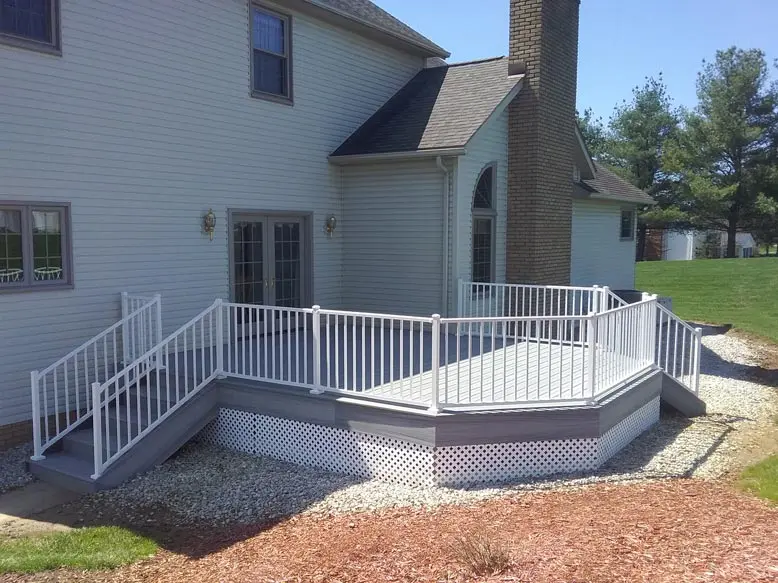
Choosing between deck repair and deck replacement depends on the age of your deck, the level of damage, and whether the issue is surface-level or a deeper structural problem. At Buckeye Elite Decks, we help homeowners make a clear, practical decision that protects safety, cost, and long-term outdoor enjoyment. This guide clarifies deck repair vs replacement so you can decide with confidence.
Overview
- Understanding the Basics
- Evaluating Your Deck’s Condition
- Cost Analysis: Repair or Replace
- Types of Decking Materials
- Making an Informed Decision
Understanding the Basics
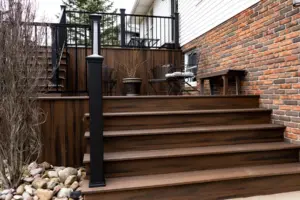
Our experts at Buckeye Elite Decks build, repair, restore, and replace decks with careful craftsmanship and honest recommendations. Whether your deck needs restoration or a full replacement, the goal is a safe, functional space built for Ohio weather—the kind that often plays tricks on everyone.
Check out some of our work we’ve enjoyed doing over the years.
What is Deck Repair?
Repair a deck to fix specific problem areas, such as loose boards, worn railings, minor rot, or surface-level decay. It only works when the main structure is still sturdy.
What is Deck Replacement?
Deck replacement means removing the old deck and building a new one when damage has become unsafe, widespread, or more costly to repair than replace.
Evaluating Your Deck’s Condition
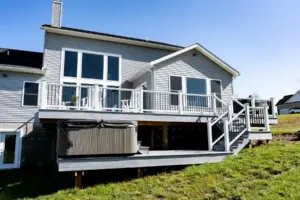
Start by checking how the deck feels underfoot. Soft, spongy, or sagging spots point to structural decay, while worn boards only need repair. Look closely at boards, railings, stairs, fasteners, and framing. Rot, decay, wobbling, or movement can show whether the issue is common wear-and-tear or a structural problem.
Signs It’s Time for Deck Repair
Deck repair can be the right choice when damage is limited to a few boards, stairs, railings, or fasteners. Minor rot or surface-level wear can usually be restored without replacing the entire deck. A solid frame, safe footing, and isolated problem areas usually mean repair can control price while bringing the deck back to everyday use.
Indicators That Call for Replacement
Deck replacement is recommended when rot, decay, infestation, or soft, spongy, sagging spots affect the deck’s structure. In these cases, a new deck offers safety and long-term value.
Cost Analysis: Repair or Replace
| Deck Repair | Deck Replacement | |
| Cost Range | · Small repairs: $300 to $1,200;
· Large repairs: $1,500 to $6,000 |
· Full replacement: several thousand to $25,000+
*depends on size, materials, railings, stairs, framing, & site condition |
| Concerns to Spot | · Isolated damage
· Loose boards · Worn railings · Minor rot · Surface-level wear · Fastener issues |
· Unsafe framing
· Widespread rot or decay · Repeated failures · Sagging areas · Nearing the end of usability |
| Factors Affecting Price | · Type of damaged material Labor
· # of boards or railings affected · Reach of the issue to joists, beams, ledger boards, stairs, or footings |
· Removal of old deck
· Framing, footings, decking boards, railings, stairs, hardware, & material · Permits · Professional installation |
Types of Decking Materials
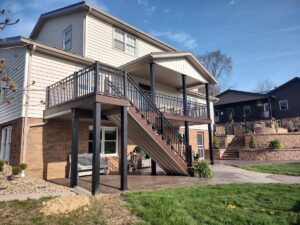
Deck board material affects appearance, maintenance, price, and long-term performance. Wood and composite each bring different benefits depending on how you use your outdoor space. Each material may require different fasteners, screws, and installation methods, so matching the repair or replacement plan to the deck product matters for both deck repair and deck replacement.
Wood or Composite Decking
Wood decking offers a natural look and can often be repaired board by board, but it needs regular maintenance to help prevent rot and decay. Composite decking provides a low-maintenance option with strong durability. It may cost more upfront, but it can reduce future restoration and repair needs.
Pros & Cons of Each Material
Wood
- Pro: familiar, attractive, & easier to repair in small sections
- Con: needs more staining, sealing, & maintenance over time
Composite
- Pro: resists many surface-level weathering issues
- Pro: keeps a clean look with less upkeep
- Con: higher starting price
- Con: not the preferred look for every home
Making an Informed Decision
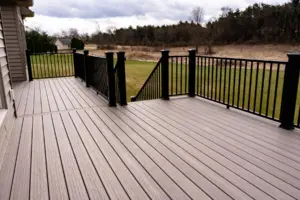
A good decision balances safety, cost, material, and the deck’s remaining useful life. Here at Buckeye Elite Decks, we focus on practical guidance, not one-size-fits-all answers.
Factors to Consider in Repairing or Replacing a Deck
Consider lumber material costs, repair history, structural decay, rot, and how much of the deck still performs well. If the damage is isolated, repair makes sense. Replacement’s usually the better value when damage is widespread.
Questions to Ask Before Proceeding
Depending on how you answer these questions, a professional inspection can make the next step clear.
- Is the issue surface-level or structural?
- How sturdy is the frame?
- Does the repair price support long-term safety?
Wrap Up

Options are available, and an expert at Buckeye Elite Decks is ready to discuss them with you. Once you decide whether it’s best to repair or replace, remember that “[e]ffective deck defense is essential for preserving [its] beauty, function, and safety,” according to Fran Donegan, who writes for the multi-platform home enthusiast brand, This Old House.